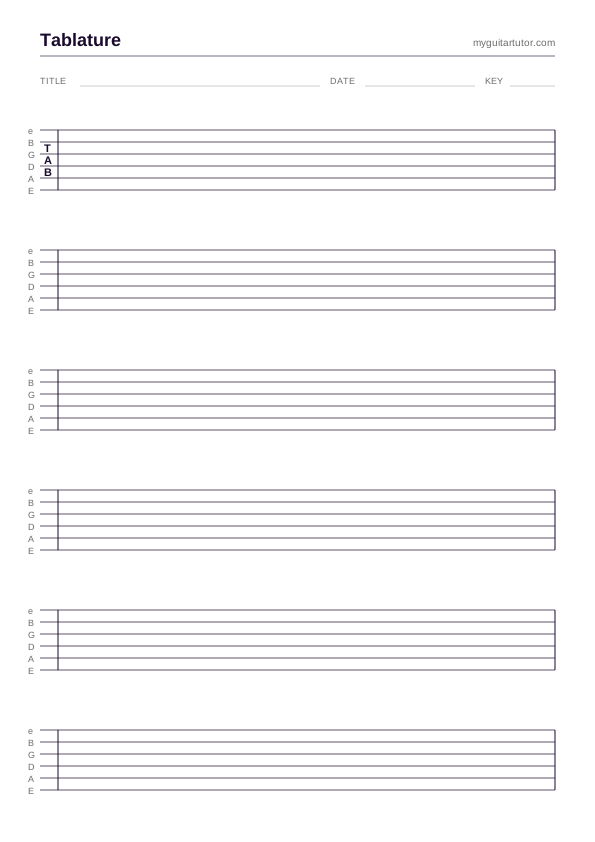
Tablature · PDF
Blank Tablature Paper · 6-string
Print-ready blank guitar tablature in A4 portrait, six staves per page. Wide spacing for handwritten notation, fingering and timing marks.
Every printable PDF in the library, in one place. Blank tablature paper for transcription. Chord charts for beginners. Scale diagrams for the practice room. Lesson planners and progress trackers for working tutors. All free, all in A4 PDF with an editable SVG alternate.
In this hub
Print-ready blank guitar tablature in A4 portrait, six staves per page. Wide spacing for handwritten notation, fingering and timing marks.
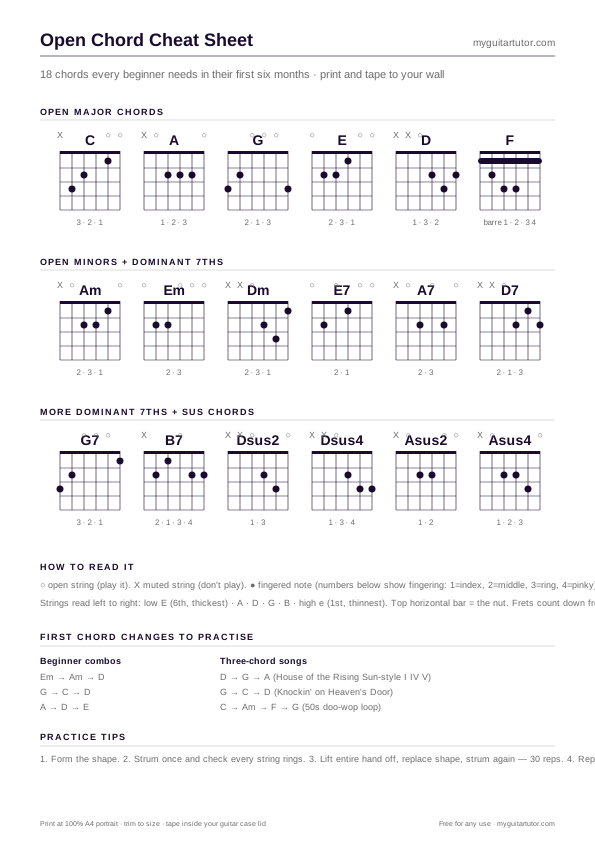
A one-page reference for the 18 most-used open chords — majors, minors, dominant 7s and sus chords. Print and tape to your wall.
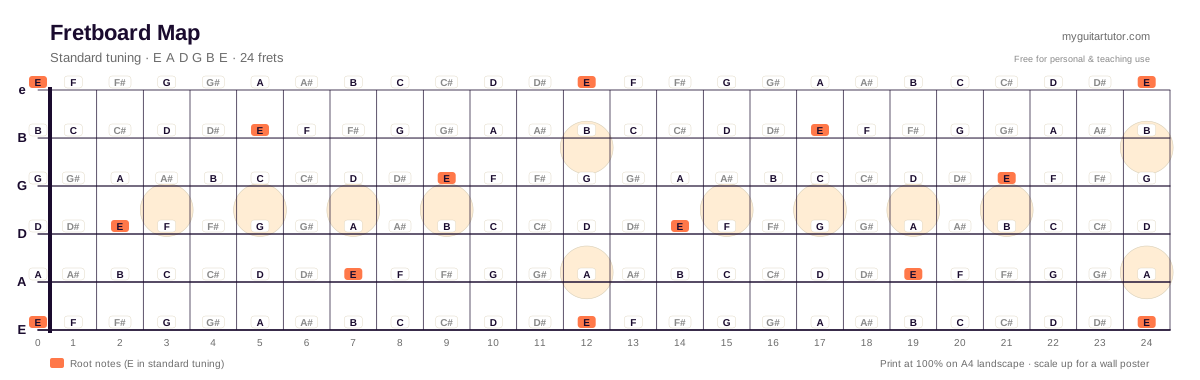
Full 24-fret fretboard diagram showing every note in standard EADGBE tuning. Sharps and flats both labelled. Inlay dots at the usual positions.
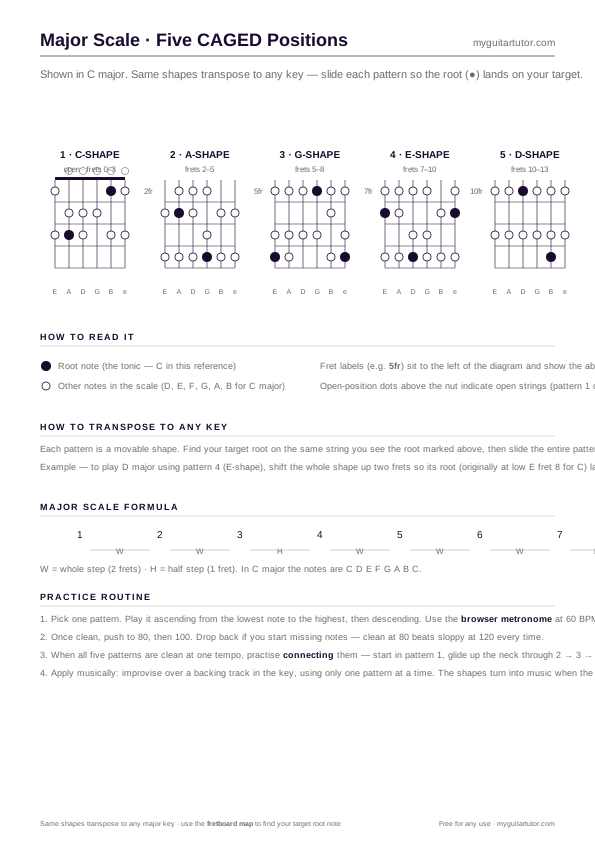
A printable reference showing all five CAGED-system fingerings of the major scale, with root notes highlighted. Transposable to any key.
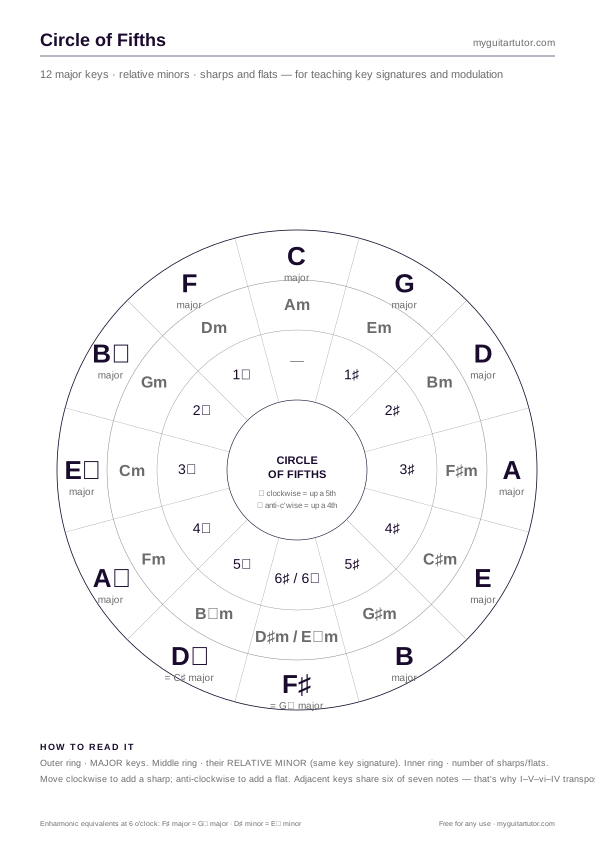
A clean printable circle of fifths with relative minors, sharps and flats. Designed for guitar tutors teaching key signatures and modulation.
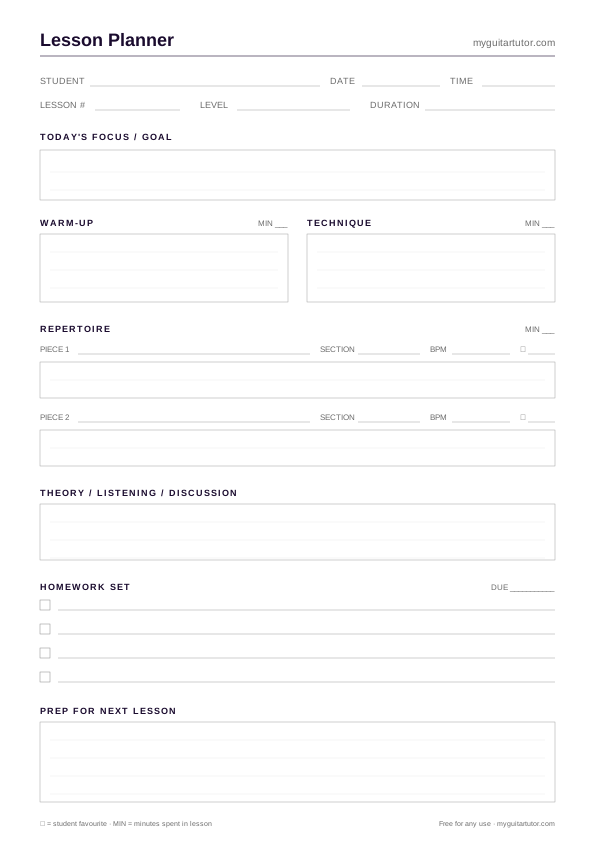
Free printable A4 guitar lesson plan template — warm-up, technique, repertoire, theory, homework, and next-lesson prep. Designed for tutors planning the next 30–60 minute session.
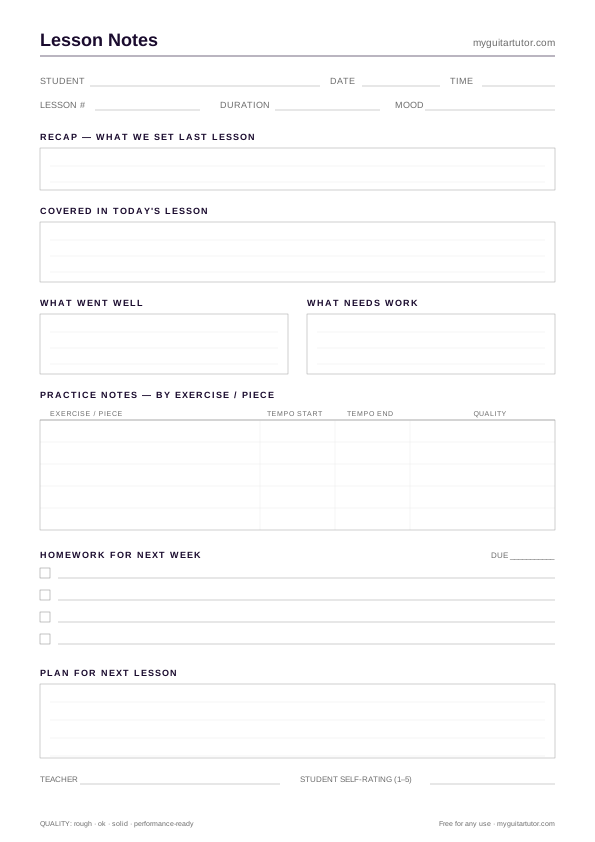
Printable A4 lesson notes template for guitar tutors — recap, what we covered, what went well, what needs work, practice notes by exercise, homework set, and next-lesson plan.
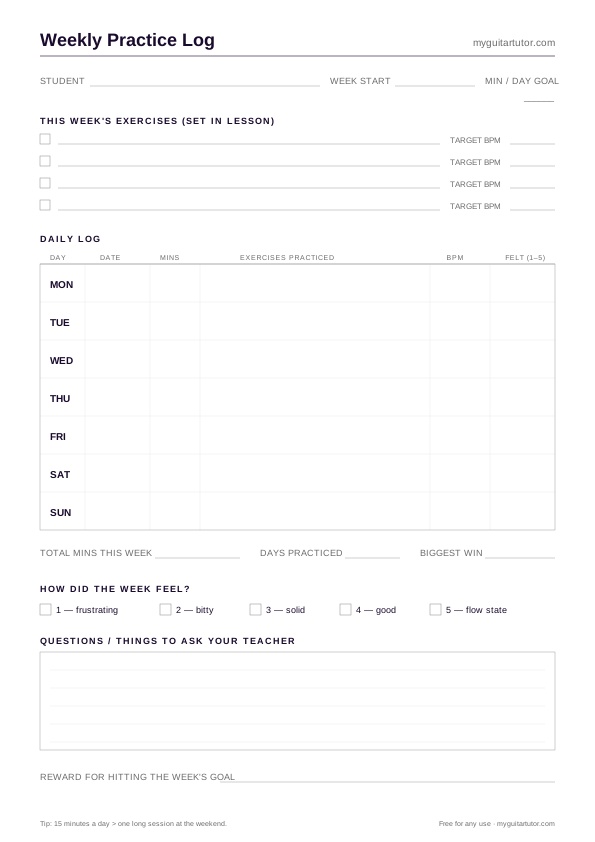
A printable A4 weekly practice log for guitar students — seven daily slots, target tempo tracking, exercise checklist, and a "how did the week feel?" rating. Hand to students at the end of a lesson.
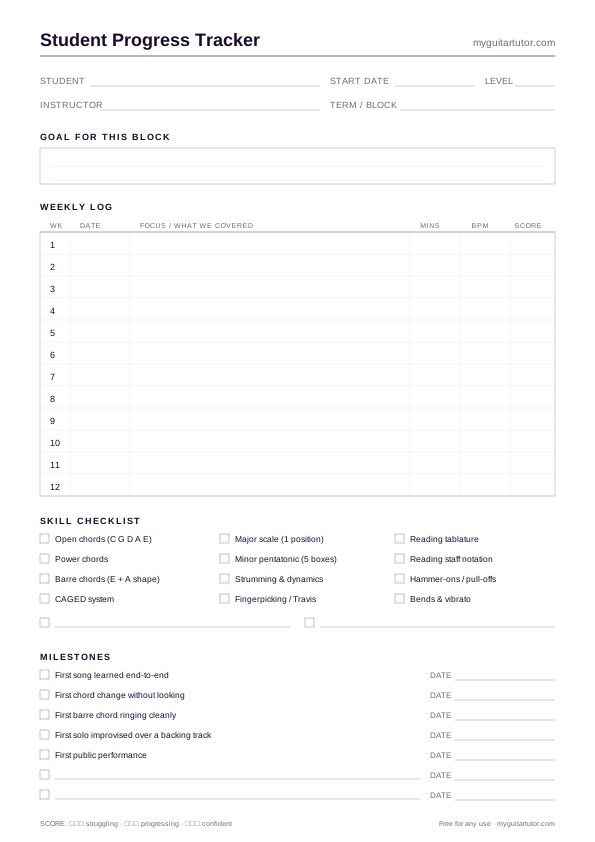
Free printable A4 student progress tracker for guitar tutors — 12-week weekly log with focus, tempo and score, plus a 12-item skill checklist and milestone list. One sheet per student, per term.
There’s an awkward truth about guitar practice: students who keep a sheet of paper next to the instrument practise more consistently than students who keep a tab open in a browser. The reason is friction. Paper is always-on. It doesn’t require unlocking a phone, dismissing a notification, opening an app, signing in, or remembering where you bookmarked the thing. You sit down, you pick up the guitar, the sheet is right there.
This collection exists because most working guitar teachers — and most serious learners — already know this. Asked what they reach for in a typical week of teaching or practising, the same nine or ten items come up over and over: blank tab paper for sketching a riff, a chord chart for a beginner, a scale diagram for a position drill, a fretboard map pinned to the wall, the circle of fifths for the inevitable theory question, and four or five teaching-workflow worksheets that keep lessons running smoothly. The library is the printed version of those nine items, free, in A4 PDF.
The nine printables fall into three loose groups, and most teachers end up using items from all three:
Reference sheets — the blank-tab paper, the open-chord cheat sheet, the fretboard notes chart, the major scale CAGED positions and the circle of fifths. These are the materials that get pinned to teaching-room walls, kept in the back of a student’s practice folder, or tucked inside the case lid. They’re reference, not curriculum: pulled out when needed, ignored when not. The blank tab paper is the most-downloaded resource in the library because every teacher needs blank staves for sketching out riffs during a lesson — you can’t buy this in shops anymore, and most online sources are watermarked or paywalled.
Teaching workflow — the lesson planner, lesson notes, weekly practice log and 12-week progress tracker. These are the four sheets that, used together, replace the typical “I keep notes somewhere” approach to teaching with a consistent system. The planner looks forward (what we’re going to cover this lesson), the notes look back (what actually happened), the practice log is for the student (homework set, daily slots, target tempos), and the progress tracker is the teacher’s longer-arc record across a 12-week block. There’s a separate guitar practice planners hub that walks through how these four fit together.
Theory & technique references — the circle of fifths, the major scale positions, and the fretboard map. The boundary between reference and curriculum gets blurry here; the circle of fifths is technically reference material but if you’re building a theory curriculum, it’s the cornerstone of about ten lessons-worth of content.
A few opinions worth surfacing, because they affect how the sheets feel in use:
A4, portrait by default. The fretboard map and the open-chord chart are landscape; everything else is portrait. US Letter prints fine at 100%, losing a few millimetres at the bottom — not enough to matter for any of these layouts.
Wide spacing over dense layout. The blank tab has six staves per page rather than eight. The chord chart shows 18 chords across a generous grid rather than cramming 30 onto one sheet. The lesson planner gives each section enough room to actually write in. The principle: a sheet you can read in 0.5 seconds beats a sheet that fits more information.
PDF first, SVG second. Most working tutors print. The SVG alternate is for the smaller group — maybe 10–15% — who want to add a studio logo, change accent colours, or rebrand the sheet for their teaching practice. Both versions are produced from the same source and stay in sync.
No watermarks, no logos, no licensing weirdness. Free for any teaching use, including paid lessons and online courses, with no attribution required. The whole point is to reduce friction between a working tutor and the materials they need to do their job. A watermark on every page defeats the purpose.
The fastest entry points by use case:
Backing tracks (MP3 / WAV) in the most-used keys for blues and pop are next in the queue. After that: left-handed chord charts, alternate-tuning fretboard maps, fingerpicking pattern sheets, and beyond-open-chords reference (barre chords, jazz voicings, drop-2 chords). If there’s something specific you find yourself reaching for, the request form on the main resources page is the fastest way to get it onto the queue.
FAQ
Other curated bundles of resources, tools and writing in adjacent topics.
The teaching-workflow subset — lesson planner, notes, practice log, progress tracker — built to fit together.
The pure-reference subset — blank tablature paper and the essential open-chord chart.
A topical hub — scale charts, chord references, tools and writing all focused on practising in A minor.