Five shapes, twelve keys, the whole fretboard
The major scale on guitar is a fingering problem before it’s a theory problem. The notes themselves are easy — seven notes per octave, evenly spaced apart from two half-step intervals. The challenge is finding those seven notes on six strings, fluently, in any key, anywhere on the neck. The CAGED system answers that with five shapes that tile the entire fretboard.
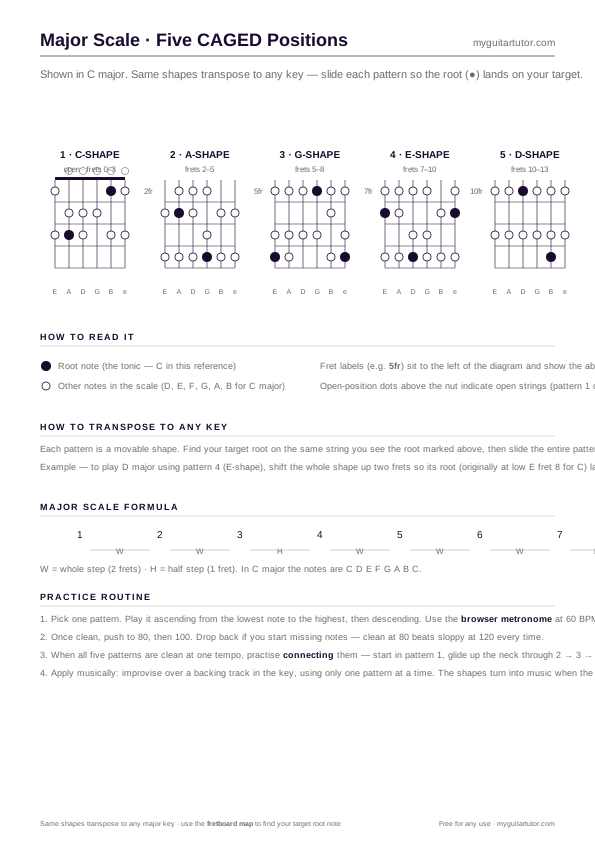
This chart shows all five in C major. The root notes (C, in all positions) are filled dots; the rest of the scale tones are hollow circles. Two of the shapes sit in the open position; three move up the neck. Together they cover the fretboard from open strings to fret 15+.
How CAGED stacks up
The reason CAGED has become the de facto teaching framework is that the scale shapes inherit the geometry students already know from chord shapes. If a student already plays an open C, A, G, E and D chord, the five CAGED scale shapes feel like extensions of muscle memory they already have, not five new patterns to learn from scratch.
Other systems exist. Three-note-per-string (sometimes called the “rock” or “shred” system) is more symmetrical and faster for some lines — preferred by metal and prog players. The Berklee “fingering 1 through 7” system is more granular and used heavily in jazz education. They’re all valid; CAGED is the most pragmatic starting point.
Transposition is just sliding
Once you can play C major in any of the five positions, you can play every other major key in any of the five positions. The shapes don’t change. The fret numbers shift. The mental model is: pick the shape you want to use, find the root note for your target key on the fretboard, slide the shape so the root lands there.
This is why the fretboard notes chart is the second resource to grab alongside this one. Knowing where the notes are makes transposition automatic.