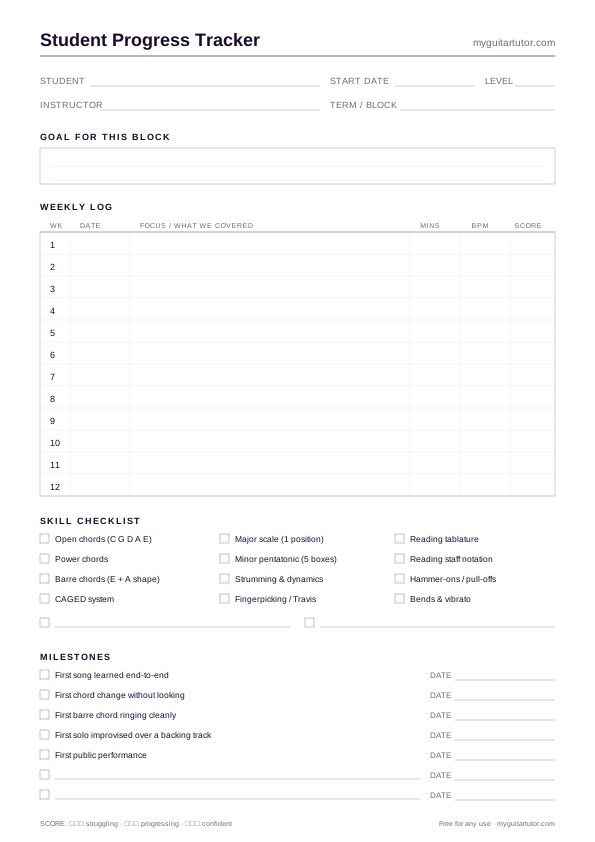
Why a tracker beats a memory
Most guitar tutors carry their students’ progress around in their heads. After twenty lessons with a beginner, you genuinely know what they can and can’t do. The problem is the student doesn’t — and the parent definitely doesn’t. When week-12 rolls around and the student says “I don’t feel like I’ve gotten any better”, you have nothing to point at.
This tracker fixes that. One A4 sheet, twelve weekly rows, twelve skill ticks, one milestones column. At the end of the block you have a single sheet that proves twelve weeks of progress — to the student, to the parent, to yourself.
What the three dimensions are tracking
The sheet tracks three different things, deliberately:
- Effort — the weekly minutes-practised column. This is what the student controls.
- Output — the BPM-achieved column. This is what the teaching produces.
- Skill acquisition — the checklist. This is the cumulative result.
When a student feels stuck, one of those three columns will tell you why. Low minutes for three weeks → effort problem, fix the practice routine. Stable BPM for three weeks → output problem, fix the lesson focus. No new checklist ticks for six weeks → curriculum problem, fix the syllabus.
The milestone column matters more than it looks
The milestones list is the column students remember at the end of the term. The weekly row of BPMs is for the teacher’s diagnostic eye. The milestones are for the human celebration. “First clean barre chord — week 6” is the kind of artefact that turns a student into a long-term student. Be generous with what counts as a milestone; small wins matter, especially early on.