Why structured practice beats “play more”
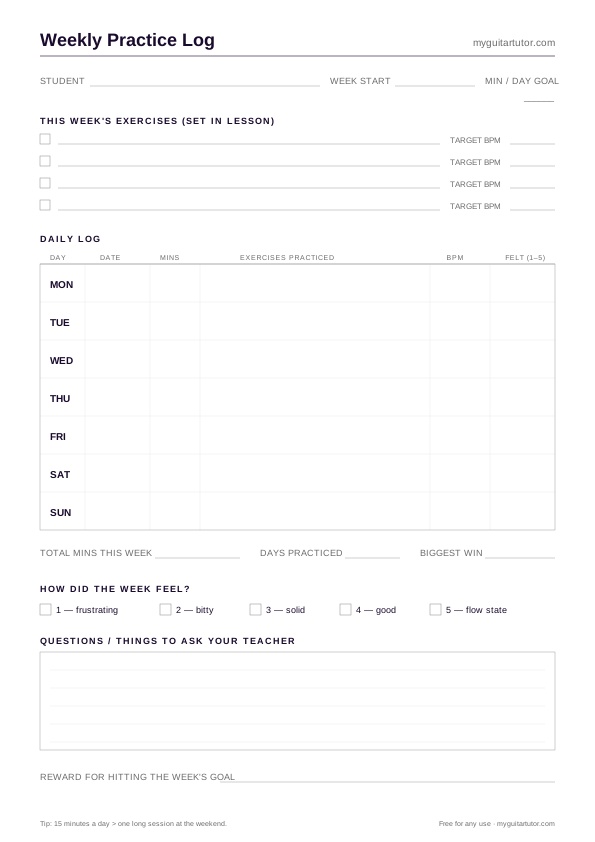
The advice “practise more” doesn’t work, and the data on student dropout is pretty clear about why: students who can’t see what they’re practising or measure how it’s going lose motivation fast. The practice log replaces the vague “play the guitar this week” with a concrete one-page contract: here are four exercises, here are the target tempos, here are seven days to work on them.
The four-exercise rule
Four is the sweet number. Two is too few — a single bad day kills momentum. Six is too many — students give up trying to fit everything in. Four exercises, each with a target BPM, gives a clear daily routine: warm-up, technique block, repertoire piece, theory or ear-training. The log’s structure forces you to pick four, which forces you to think about what the student actually needs this week.
The 1–5 “how did it feel” score
The last column on each daily row is a 1–5 self-rating: how did the practice session feel? Most students undervalue this column. Don’t. The pattern of those scores across a week tells you more than the minutes-practised number — three 5s in a row means you can push the tempo next week; five 2s means the exercise was wrong for them and you need to back off.
Why pen-and-paper, not an app
Beginners — especially children — practise more when the tracking lives next to the instrument, not inside an app on a phone that’s also full of distractions. The printed log is on the music stand. It’s the first thing they see when they pick up the guitar. The pen sits next to it. Friction-free logging is the difference between a sheet that gets filled in and one that doesn’t.